New Website KPIs for Dentists and Plastic Surgeons in the AI Era
Organic search used to be the whole game. Rank well, get clicks, convert patients. Simple. That model is cracking, and the channel reports prove it.
Numbers Worth Watching
We pulled channel data from two clients this year: a cosmetic dentistry practice and a plastic surgery practice. Both tell the same story from different angles.
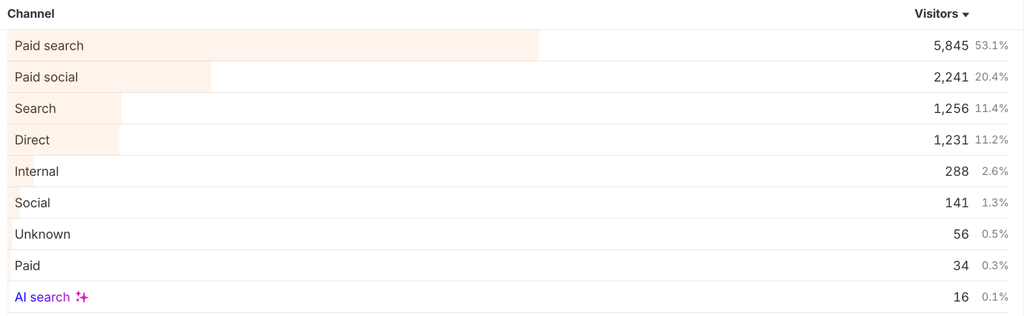
On the dental site, organic Search sits at 11.4 percent of visitors, barely ahead of Direct at 11.2 percent. AI search is rounding out at 0.1 percent, 16 visits.
Figure 1: Channel breakdown, cosmetic dentistry client. Source: Ahrefs.
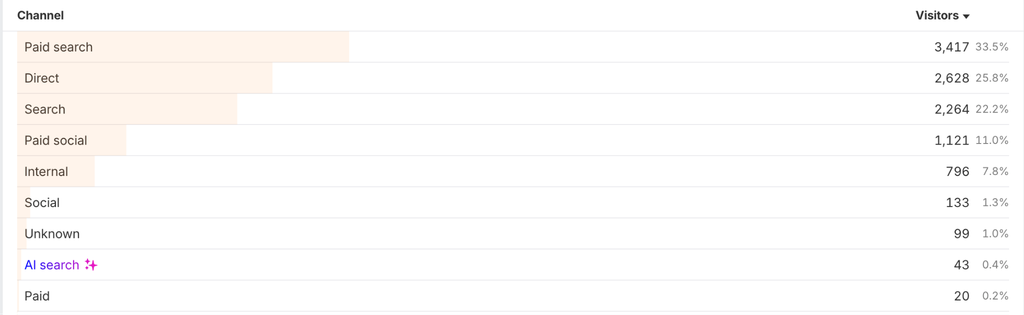
On the plastic surgery site, the gap is wider and the numbers are harder to ignore. Organic Search is at 22.2 percent, but Direct has pulled ahead of it at 25.8 percent. AI search shows 43 visits, 0.4 percent of total traffic — four times the share we saw on the dental site. And here’s the number that matters: this practice’s organic traffic is down 22 percent year over year, but overall leads are up over the same period.
Figure 2: Channel breakdown, plastic surgery client. Source: Ahrefs.
Fewer organic sessions. Far more converted leads. That combination doesn’t happen by accident.
What’s Actually Going On
Organic is down because AI tools are increasingly answering the question before the patient ever reaches a search results page. Someone asks ChatGPT or a Google AI Overview who does the best rhinoplasty in their city, gets a synthesized answer with a name attached, and never scrolls a list of ten blue links. That’s a real visit that never becomes an organic search session.
Direct is up because most of that AI-assisted traffic doesn’t arrive with a referrer. A click from an AI answer, a link copied out of a chat window, a tap from an app with its own in-browser sandbox — analytics platforms have exactly one bucket for traffic with no known origin, and it’s labeled Direct. Some of what we’re calling Direct today is organic and AI-referred traffic that lost its paper trail on the way in.
AI search is small but rising, and it’s the only channel on this list that didn’t exist eighteen months ago. Treat the current numbers as a floor, not a ceiling.
Leads are up anyway. That’s the part worth building a strategy around. A patient who arrives after an AI tool has already compared providers and made a recommendation shows up further down the funnel than someone who found you cold on page one of Google. Fewer visits. Better visits.
The Strategy: Diversify Everything
The instinct when organic dips is to double down on organic. That’s the wrong instinct now. The right response is to stop treating any single channel as the growth engine and build a portfolio instead.
GEO and SEO content, run together, not separately. Generative Engine Optimization and traditional SEO for doctors and medical practices are no longer two disciplines competing for budget. In fact, they’re two audiences reading the same page. A well-structured service page with clear headings, direct answers, and solid schema markup still ranks in Google. It also gets pulled into AI Overviews and cited by chatbots, because those systems are looking for exactly the same signals of clarity and authority that search engines have rewarded for years. Write for the human and the model at once: answer the question plainly in the first two sentences, back it up with specifics, and structure the page so both a crawler and a language model can lift the right paragraph.
Diversified ad spend across channels, not a bet on one. Paid search options (for example: Google Local Service Ads) still deliver the largest single share of traffic on both client sites we looked at, and it should stay funded. But paid social media advertising, and increasingly paid placement inside AI-powered surfaces, are pulling real weight too. A practice that puts its entire paid budget into search ads is exposed to a single platform’s algorithm and a single cost-per-click market. Spreading spend across search, social, and emerging AI ad placements protects the practice when any one channel gets more expensive or less effective, and it puts the brand in front of patients at different points in their decision, not just the moment they type a query.
Content marketing that earns citations, not just clicks. FAQ pages, procedure comparisons, and clearly written provider bios do double duty now. They rank. They also become the raw material an AI tool pulls from when it’s building an answer for a prospective patient. Investing in genuinely useful, well-organized content pays out in two channels for the price of one.
The Bottom Line
Organic traffic is not dying, but the definition of a healthy traffic report is changing. A practice can see organic sessions fall and leads climb, and that’s not a red flag — it’s a sign that other channels are carrying weight the old dashboard wasn’t built to show. The practices that win this transition will be the ones that stop worrying about which single channel is losing and start building a strategy that never depended on just one in the first place.
Ready to Build a Traffic Strategy That Doesn’t Depend on One Channel?
If your practice’s organic numbers are shifting and you’re not sure whether that’s a warning sign or a natural part of this transition, we can help you find out. Rosemont Media works with dental and plastic surgery practices to build websites and content strategies designed for both traditional search and the AI tools now shaping how patients find providers. From GEO-ready content to diversified paid campaigns, we can help you turn a changing landscape into a growth opportunity.
Please contact Rosemont Media today to schedule a consultation and see how your practice’s channel mix stacks up.