Healthcare Industry Is Seeing the Largest AI Search Disruption
- Healthcare has the highest AI search disruption rate of any industry at 51.6 percent, according to NP Digital data, far ahead of education and media/publishing at 39 percent each.
- The shift is happening because health searches are highly informational, and AI tools are increasingly answering those questions directly, without sending users to a website.
- Practices that haven’t audited their visibility inside AI-generated answers are likely losing traffic and patient inquiries without even realizing it.
- Adapting to this shift requires generative engine optimization (GEO): building content structured for how patients ask questions and how AI tools extract and cite answers.
If you work in healthcare marketing, you’ve probably noticed something changing in how patients find information online. Fewer people seem to be clicking through from search results, even as inquiries and website questions increasingly reference things patients say they “read” or “heard” from an AI assistant. That’s not a coincidence. New data confirms what many practices are already feeling: healthcare is being reshaped by AI search faster than almost any other industry, and understanding why is the first step to doing something about it.
The Numbers Behind the Shift
According to a recent analysis from NP Digital, healthcare is experiencing an AI search disruption rate of 51.6 percent, the highest of any sector measured.1 That’s not a projection or a future trend to watch. It’s a current snapshot of how much health-related search behavior has already shifted away from traditional search engines and toward AI tools like ChatGPT, Gemini, and AI Overviews.
To put that number in context, education and media/publishing followed at 39 percent each. Finance came in at 32.1 percent, SaaS and technology at 30 percent, B2B services at 18 percent, and ecommerce at just 14 percent. That’s a spread of nearly 38 percentage points between the most disrupted industry and the least. Healthcare isn’t just ahead of the pack. It’s in a category of its own.
Why Healthcare Is Leading the Shift
The reason healthcare tops this list comes down to the nature of the questions people ask. Health searches are overwhelmingly informational. Patients and caregivers want to understand symptoms, compare treatment options, research medications, or get a general sense of what a procedure involves before ever picking up the phone. Those are exactly the kinds of queries AI tools are built to answer directly, often without the user ever clicking through to a website.
The Trust Factor
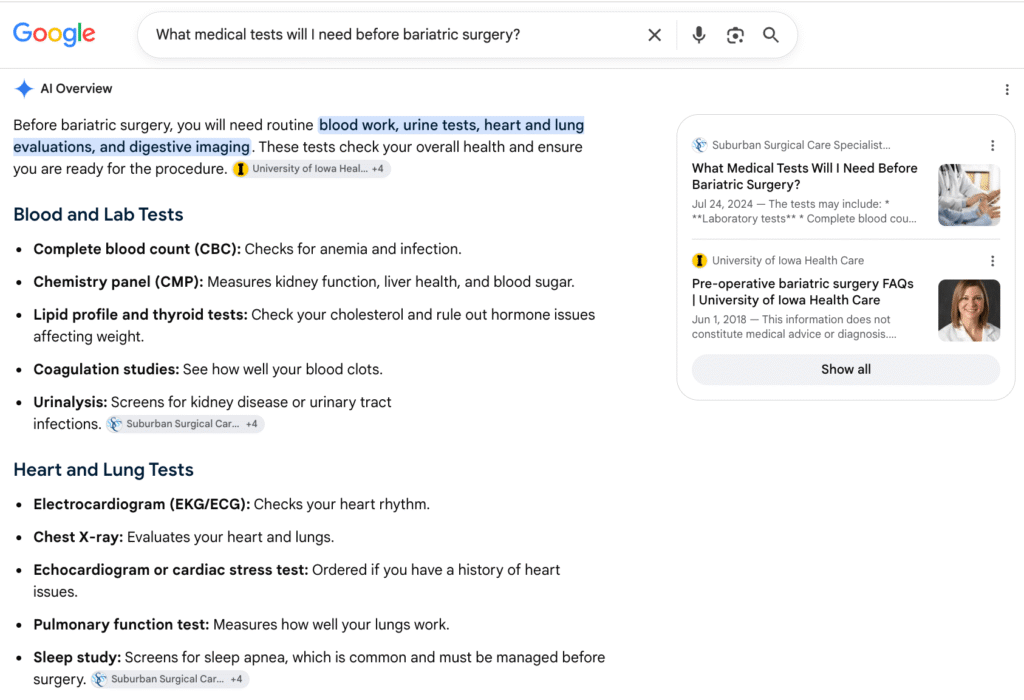
There’s also a trust factor at play. According to BrightEdge data, AI Overviews now show up on approximately 88 percent of healthcare-related searches, one of the highest rates of any industry tracked.2 Despite ongoing concerns about the accuracy of AI-generated medical information, usage patterns show that people are turning to AI as their first stop for health answers at a higher rate than almost any other topic. We’ve seen this firsthand: AI Overviews are already cutting into medical and dental site clicks. Whether or not that’s the ideal outcome for patient safety, it’s the reality practices now have to market within.
Why Ecommerce Looks Different
Compare that to a transactional category like ecommerce, where someone might use AI to research a product but still has to visit a retailer’s website to actually buy it. That extra step preserves more direct traffic. Healthcare doesn’t have that same buffer, because so much of the value in a health search is the answer itself, not a transaction that follows it.
What This Means for Your Practice
If your practice, clinic, or medical group hasn’t already looked into how visible you are inside AI-generated answers, this data is a clear signal to start now, not later. A disruption rate above 50 percent means that more than half of the people searching for information related to your specialty may never see a traditional search results page at all. They’re getting their answer directly from an AI tool, and that answer is being built from whichever sources the AI considers credible and well-structured.
Where GEO Comes In
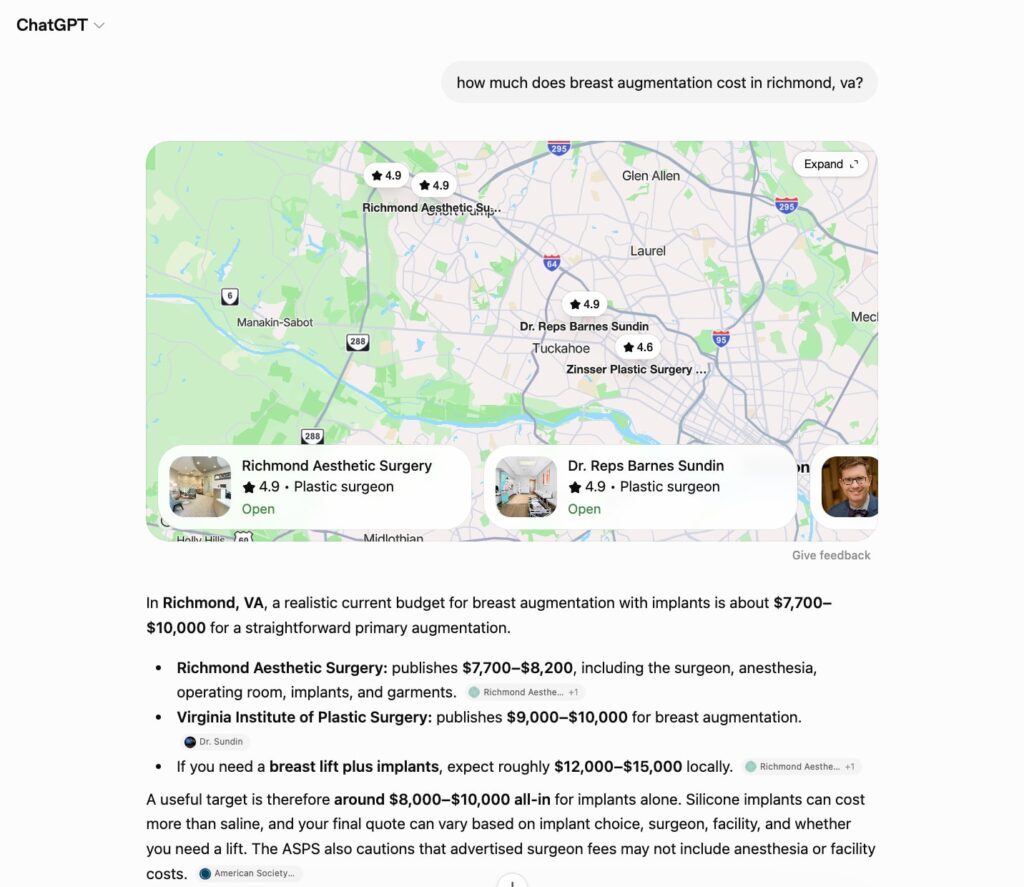
This is where generative engine optimization, also known as AI search engine optimization or GEO, comes in. Unlike traditional SEO, which is built around ranking on a results page, GEO is about becoming the source an AI model chooses to cite or summarize when it answers a patient’s question. For healthcare providers, that means building content around the exact way patients phrase their concerns: symptom-to-treatment content clusters, clear condition-specific FAQs, and pages structured so AI systems can easily extract accurate, attributable information.
Making the Case Internally
There’s also an urgency argument here that healthcare marketers can use internally. A 51.6 percent industry disruption rate is hard data you can point to when making the case for investment in AI visibility, whether that’s to a practice owner, a hospital system’s marketing committee, or your own leadership team. This isn’t a hypothetical risk. It’s already happening, and the practices treating it as a someday project are, in effect, optimizing for a search landscape that no longer fully exists.
Getting Ahead of the Curve
The data is clear on one point: healthcare isn’t watching AI search disruption from the sidelines. It’s leading it. The practices that come out ahead will be the ones auditing their current AI citation share now, before disruption climbs even higher, and adapting their content strategy to meet patients inside these AI-driven conversations rather than waiting for them to land on a traditional website.
Ready to Future-Proof Your Practice’s Visibility?
If you’re unsure how visible your practice is inside ChatGPT, Gemini, or AI Overviews, or you simply don’t have the bandwidth to build a GEO strategy on top of everything else on your plate, Rosemont Media can help. Our team specializes in healthcare and medical practice marketing, and we can audit your current AI search presence, identify where you’re losing visibility, and build a content strategy designed to get your practice cited where patients are actually looking. Contact Rosemont Media today to find out where your practice stands and what it will take to stay ahead of this shift.
References
1 NP Digital: Which Industries Are Seeing the Biggest AI Search Disruption?
2 BrightEdge: Healthcare and AI Overviews: How Google Sharpened Its Approach Over Three Years